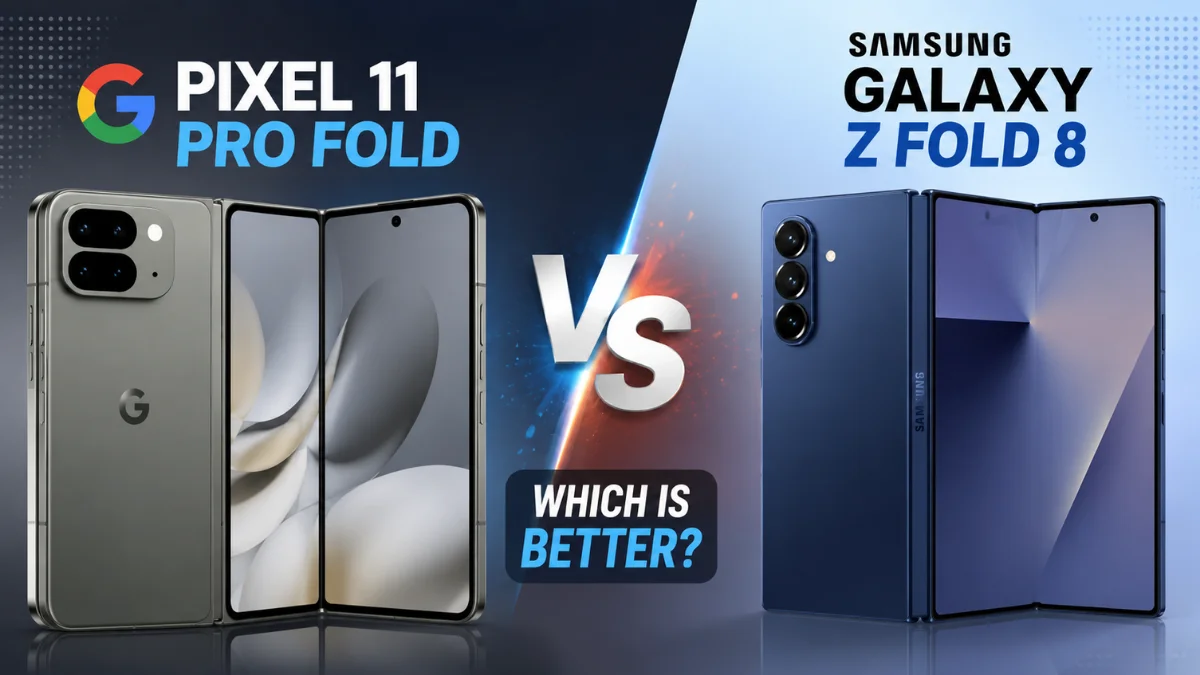
Pixel 11 Pro Fold vs Galaxy Z Fold 8: Which Is Better?
 By Inflix
 The Pixel 11 Pro Fold and Samsung Galaxy Z Fold 8 are two of the most interesting foldable phones of 2026. Both offer large folding displays, powerful AI features, and premium designs, but they take noticeably different approaches.
Google focuses heavily on its clean Android experience, Tensor G6 processor, Gemini features, and camera software. Samsung, meanwhile, offers a much lighter design, Snapdragon performance, and a mature multitasking experience.
So, which foldable should you actually buy? This Pixel 11 Pro Fold vs Galaxy Z Fold 8 comparison breaks down the differences that matter most.
Pixel 11 Pro Fold vs Galaxy Z Fold 8: Quick Comparison
Before looking deeper, here is a simple overview.
| Feature | Pixel 11 Pro Fold | Galaxy Z Fold 8 |
|---|---|---|
| Main display | 8.0-inch foldable OLED | 7.6-inch Dynamic AMOLED 2X |
| Refresh rate | Up to 120Hz | Up to 120Hz |
| Processor | Google Tensor G6 | Snapdragon 8 Elite Gen 5 for Galaxy |
| RAM | 16GB | Varies by configuration |
| Main camera | 48MP triple-camera system | 50MP wide + 50MP ultrawide system |
| Weight | Around 239 g | 201g |
| Folded thickness | Around 10.1mm | Slimmer overall design |
| Water/dust resistance | IP68 | IP48 |
| Software | Android 17 | Samsung One UI |
| Starting US price | $1,899 | $1,899.99 |
The biggest differences become much clearer once you start looking at everyday usability.
Design: Samsung Has a Major Weight Advantage
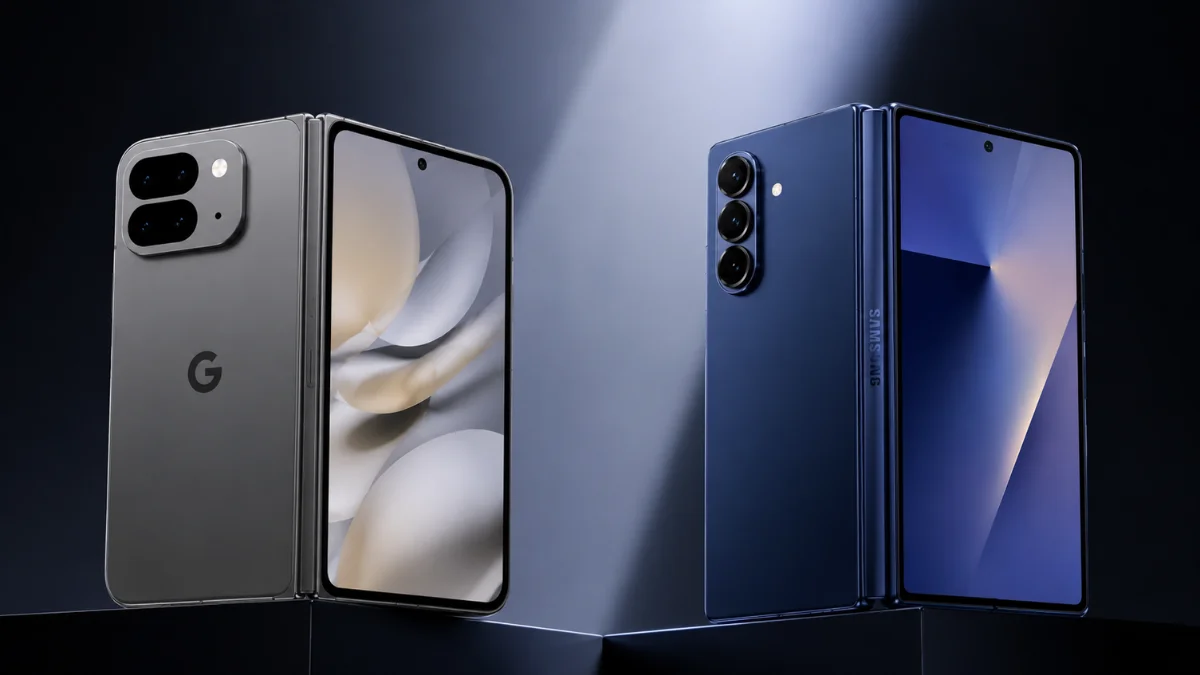
The Pixel 11 Pro Fold has become thinner and lighter than Google’s previous foldable. At around 239g and approximately 10.1mm thick when folded, it should feel noticeably easier to carry.
However, Samsung has pushed weight reduction much further.
The Galaxy Z Fold 8 weighs just 201g, according to Samsung. That is a significant difference for a device you may hold for hours every day.
Samsung also redesigned the Fold 8 around a shorter and wider form factor. As a result, the cover screen should feel more natural for messaging, browsing and everyday smartphone tasks.
Google’s foldable still looks premium, but Samsung takes the design round for buyers who prioritize portability.
Winner: Galaxy Z Fold 8
Pixel 11 Pro Fold Display vs. Galaxy Z Fold 8
Open the Pixel 11 Pro Fold, and you get an 8-inch foldable OLED display with a refresh rate of up to 120Hz.
That large canvas makes the Pixel attractive for:
- Watching videos
- Reading websites
- Editing documents
- Viewing photos
- Running apps side by side
- Using Gemini on a larger screen
Samsung takes a slightly different approach.
The Galaxy Z Fold 8 features a 7.6-inch Dynamic AMOLED 2X main display with a 120Hz refresh rate. Its cover display measures 5.5 inches.
Samsung designed the inner screen around a 4:3 aspect ratio, which works particularly well for reading, browsing, and media.
The Pixel gives you the larger main display, while Samsung’s proportions and much lighter body may make its screens easier to use throughout the day.
Winner: Pixel 11 Pro Fold for screen size
Performance: Snapdragon vs Tensor G6
Performance is one of the biggest differences between these phones.
Google powers the Pixel 11 Pro Fold with its new Tensor G6 processor. The chip focuses heavily on Google’s AI and machine-learning features.
For normal use, Tensor G6 should comfortably handle social media, photography, multitasking, and demanding Android apps.
Samsung uses the Snapdragon 8 Elite Gen 5 for Galaxy.
That processor makes the Fold 8 particularly attractive to users who prioritize demanding workloads, gaming, and sustained performance.
Google’s advantage comes from tight integration between Tensor hardware, Android, and Gemini. Samsung’s advantage comes from Qualcomm’s high-end Snapdragon platform.
For raw performance, Samsung has the stronger proposition.
Winner: Galaxy Z Fold 8
Pixel 11 Pro Fold AI Features vs. Galaxy Z Fold 8
AI plays a major role on both devices.
The Pixel 11 generation brings deeper Gemini integration alongside Google’s expanding collection of AI-powered photography and productivity tools.
Because Google develops both Android and Gemini, the Pixel 11 Pro Fold provides one of the most direct ways to experience Google’s latest AI features.
Samsung is hardly behind, though.
Galaxy AI combines Samsung’s own features with Google’s Gemini technology. The large folding screen also allows Samsung to integrate AI into its strong Multi Window experience.
Therefore, the better choice depends on your preference.
Choose Pixel if you want Google’s AI experience in its most direct form. Choose Samsung if you want AI combined with more established foldable multitasking tools.
Winner: Tie
Cameras: Two Very Different Approaches
Google has built a strong reputation around computational photography, and the Pixel 11 Pro Fold continues that approach.
The phone features a 48MP-based triple rear camera system. Google also provides its latest computational photography and AI-assisted editing capabilities.
Samsung’s Galaxy Z Fold 8 uses a 50MP wide camera alongside a 50MP ultrawide camera. Samsung lists digital zoom up to 10x.
However, megapixels alone cannot determine which camera is better.
Google traditionally puts considerable emphasis on image processing, skin tones, and computational photography. Samsung often delivers brighter, more vivid results alongside a versatile camera experience.
For users who love Google’s Pixel photography style, the Pixel remains extremely attractive.
Still, buyers should compare real-world camera samples rather than choosing purely from specifications.
Winner: Depends on photography preference
Pixel 11 Pro Fold Durability and IP68 Protection
Foldable durability has historically been a concern for buyers.
Google has made this an important part of the Pixel 11 Pro Fold upgrade. The new model carries an IP68 rating, giving it stronger official dust and water protection than many previous foldables.
Samsung’s Galaxy Z Fold 8 carries an IP48 rating.
Samsung has also strengthened its hardware with Armor Aluminum, protective Gorilla Glass, and its updated Armor FlexHinge. In addition, Samsung says Flex Titanium reinforces the folding display structure.
Both companies have clearly invested heavily in durability.
However, Google’s IP68 rating gives the Pixel a notable specification advantage for dust protection.
Winner: Pixel 11 Pro Fold
Multitasking: Samsung Still Has the Edge
A large folding screen becomes much more useful when the software takes advantage of it.
This is an area where Samsung has years of experience.
Galaxy Z Fold 8 supports features such as
- Multi Window
- Samsung DeX
- App Continuity
- Taskbar tools
- Galaxy AI
- Large-screen productivity features
Samsung DeX is particularly valuable for users who want to connect their phone to a larger display and create a desktop-like workspace.
Google has improved Android significantly for foldables, and the Pixel’s large screen works well for running multiple apps.
Nevertheless, Samsung still provides the more mature productivity ecosystem.
Winner: Galaxy Z Fold 8
Software: Clean Android or Feature-Rich One UI?
Software preference could decide this entire comparison.
The Pixel 11 Pro Fold ships with Android 17 and provides Google’s own interpretation of Android.
Pixel owners typically receive Google’s newest Android features directly, while Gemini integration remains central to the experience.
Samsung uses One UI, which adds significantly more customization and productivity tools.
Some users may prefer Google’s cleaner interface. Others will appreciate Samsung’s additional settings, multitasking options and Galaxy ecosystem.
Neither approach is universally better.
Pixel: Better for clean Google Android.
Samsung: Better for customization and advanced productivity.
Battery Life Could Be a Close Battle
Battery life is particularly important on foldables because large displays consume more power.
Samsung lists a 4,800mAh battery for the Galaxy Z Fold 8 and claims up to 26 hours of video playback under its testing conditions.
Google has changed the battery setup on the Pixel 11 Pro Fold while also introducing the more efficient Tensor G6 platform.
However, battery capacity alone does not tell the full story.
Display brightness, network conditions, app usage, AI workloads, and camera use can dramatically affect real-world endurance.
Therefore, independent battery testing will provide a better comparison than specifications alone.
For now, there is no clear winner.
Winner: Too close to call
Galaxy Z Fold 8 Is Much Lighter
This deserves extra attention because weight has a major effect on foldable usability.
Pixel 11 Pro Fold: around 239g
Galaxy Z Fold 8: 201g
A difference of roughly 38g may not sound enormous on paper. However, you can notice it when holding a phone one-handed, carrying it in a pocket or using it for long reading sessions.
Samsung’s weight reduction is therefore one of the strongest reasons to choose the Fold 8.
Google has improved significantly, but Samsung wins comfortably here.
Price: Almost Identical
Interestingly, price does little to separate these two devices in the US.
The Pixel 11 Pro Fold starts at $1,899, while Samsung lists the Galaxy Z Fold 8 from $1,899.99.
That makes the buying decision much more interesting.
Instead of simply choosing the cheaper phone, buyers need to decide which ecosystem and hardware priorities suit them better.
However, promotions, trade-in offers and regional pricing can significantly change the final cost.
Always compare current prices before buying.
Which Phone Is Better for Gaming?
For serious mobile gaming, the Galaxy Z Fold 8 is the safer choice.
Its Snapdragon 8 Elite Gen 5 for Galaxy processor is designed to provide flagship-level CPU and GPU performance.
The large 7.6-inch AMOLED display also gives games plenty of screen space.
The Pixel 11 Pro Fold can certainly handle modern Android games. Nevertheless, Google’s Tensor chips traditionally focus more heavily on AI, photography and Google’s software features than benchmark-leading gaming performance.
Winner: Galaxy Z Fold 8
Pixel 11 Pro Fold vs Galaxy Z Fold 8 Cameras
This decision is less straightforward.
Google’s strength lies in computational photography and its Pixel camera processing. Samsung, meanwhile, provides its own strong camera system and flexible shooting experience.
If you already love the look of photos from Pixel phones, the Pixel 11 Pro Fold is likely to feel more familiar.
However, neither foldable should automatically replace a conventional Ultra or Pro flagship for someone whose number-one priority is camera hardware.
For most users, both should provide capable everyday photography.
If you are still deciding whether a folding phone is right for you, read our Are Foldable Phones Worth Buying in 2026? guide for a broader look at the pros and cons. Samsung buyers can also explore our Galaxy Z Flip8 vs Galaxy Z Flip7 comparison, while Google fans can check our Google Pixel 11 vs Pixel 10 comparison to see how Google’s latest generation has changed.
Which Foldable Should You Buy?
Choose the Pixel 11 Pro Fold if you want:
- An 8-inch inner display
- Google’s clean Android experience
- Deep Gemini integration
- Pixel computational photography
- IP68 protection
- Google’s latest AI features
Choose the Galaxy Z Fold 8 if you want:
- A dramatically lighter foldable
- Snapdragon flagship performance
- Samsung DeX
- More mature multitasking
- Galaxy AI
- A wider Samsung ecosystem
- Better suitability for demanding gaming
For productivity-focused buyers, Samsung has a convincing advantage.
For users deeply invested in Google’s ecosystem, however, Google’s foldable remains an excellent alternative.
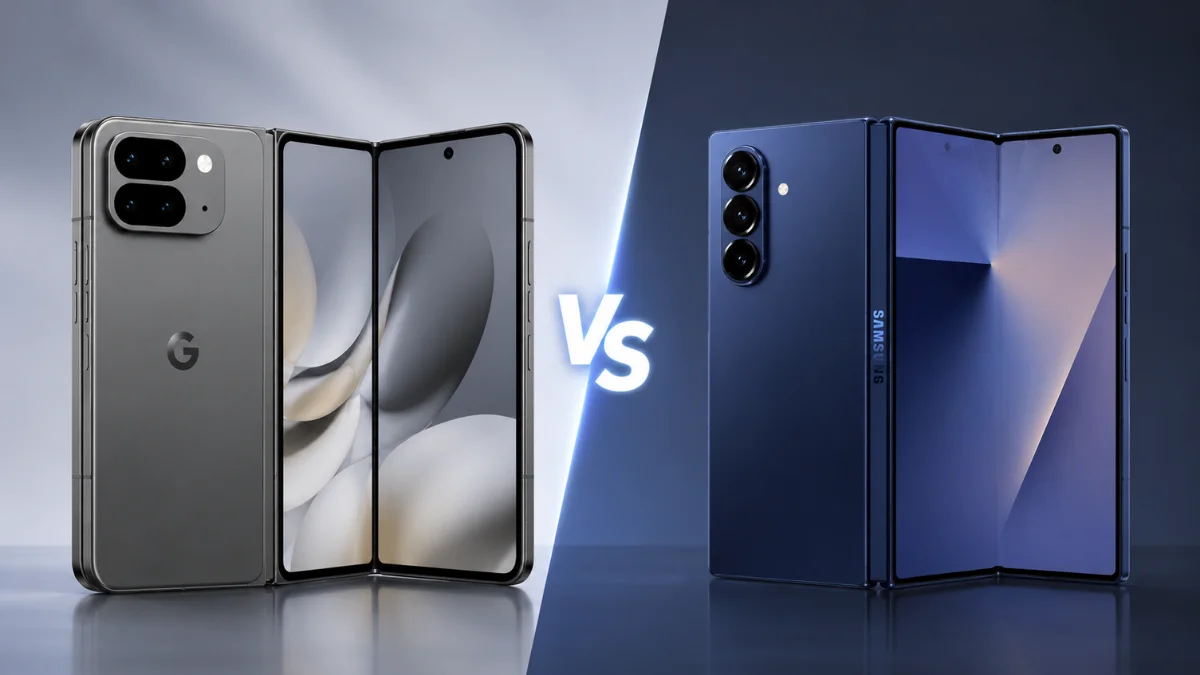
Pixel 11 Pro Fold vs Galaxy Z Fold 8: Final Verdict
The Pixel 11 Pro Fold and Galaxy Z Fold 8 prove how much foldable phones have improved.
Google offers the larger main display, strong IP68 protection, Tensor G6, Pixel photography and deep Gemini integration. Meanwhile, Samsung delivers a much lighter 201g body, powerful Snapdragon hardware and one of the most mature multitasking experiences available on a foldable.
Overall, the Galaxy Z Fold 8 is our pick for most buyers, particularly those who care about portability, performance and productivity.
However, Pixel fans should not dismiss Google’s foldable. Google’s foldable makes more sense for users who value Google’s software, AI features, camera processing and larger 8-inch display.
Ultimately, both are premium foldables. Your preferred ecosystem may matter more than any single specification.
FAQs
Is Pixel 11 Pro Fold better than Galaxy Z Fold 8?
The Pixel offers a larger main display and IP68 protection, while the Galaxy Z Fold 8 is significantly lighter and provides stronger multitasking features. The better choice depends on your priorities.
How much does the Pixel 11 Pro Fold cost?
The Pixel 11 Pro Fold starts at $1,899 in the US.
How much does the Galaxy Z Fold 8 cost?
Samsung lists the Galaxy Z Fold 8 from $1,899.99 in the US, although promotions and trade-in offers can reduce the effective price.
Which foldable has the bigger screen?
Google’s foldable has an 8-inch main display, compared with the Galaxy Z Fold 8’s 7.6-inch main display.
Which foldable is lighter?
The Galaxy Z Fold 8 is considerably lighter at 201g, while the Pixel 11 Pro Fold weighs around 239g.
Which phone is better for multitasking?
The Galaxy Z Fold 8 has the advantage because Samsung offers mature Multi Window features, a taskbar, App Continuity and Samsung DeX.
Should I buy the Pixel 11 Pro Fold or Galaxy Z Fold 8?
Choose the Pixel for Google’s Android experience, Gemini, camera processing and IP68 protection. Choose the Galaxy Z Fold 8 for lighter hardware, Snapdragon performance and stronger productivity features.