Samsung Scam Detection Could Reach Galaxy S27 and Older Phones
 By Inflix
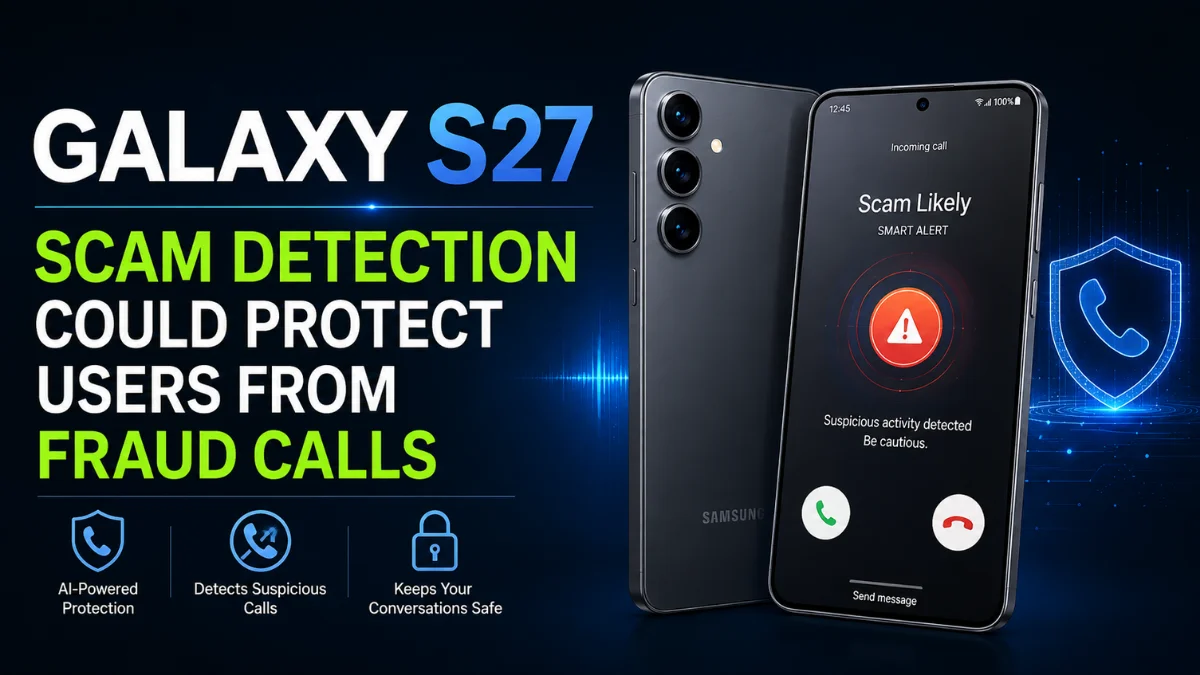
 Samsung Scam Detection could become available on significantly more Galaxy phones. New evidence found within Google software suggests the upcoming Galaxy S27 series may support real-time scam call detection, while several existing Samsung flagships could also gain access.
The feature is designed to recognise suspicious conversations during phone calls and warn users when a potential scam is detected. With fraudulent calls becoming increasingly sophisticated, wider Galaxy support could turn it into an important everyday security feature.
However, Samsung and Google have not officially confirmed support for all of the newly discovered devices. Therefore, the latest information should be treated as evidence of planned or tested compatibility rather than a guaranteed rollout.
Samsung Scam Detection Could Expand to More Galaxy Phones
New findings inside Google software indicate that Samsung Scam Detection support may be expanding.
Android Authority found references to upcoming Galaxy S27 devices and several existing Samsung phones during an APK teardown.
The findings suggest Google is preparing its Scam Detection technology to work across a broader range of Galaxy hardware.
This expansion would mark an important step because Google initially limited Scam Detection mainly to Pixel phones before bringing the feature to selected Samsung devices.
How Does Samsung Scam Detection Work?
Scam Detection is intended to identify patterns commonly associated with fraudulent phone calls.
Rather than simply checking whether an incoming number has previously been reported as spam, the technology can look for suspicious behaviour during a conversation.
For example, scammers frequently create a sense of urgency and ask victims to transfer money, reveal financial details, purchase gift cards or provide account information.
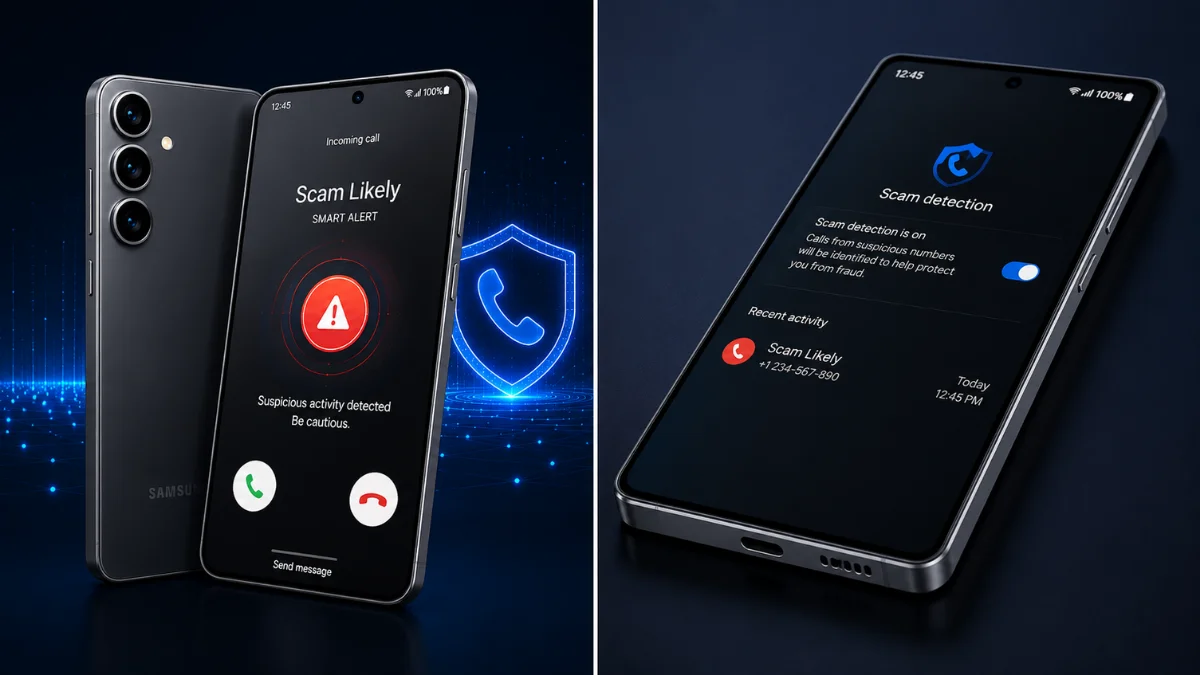
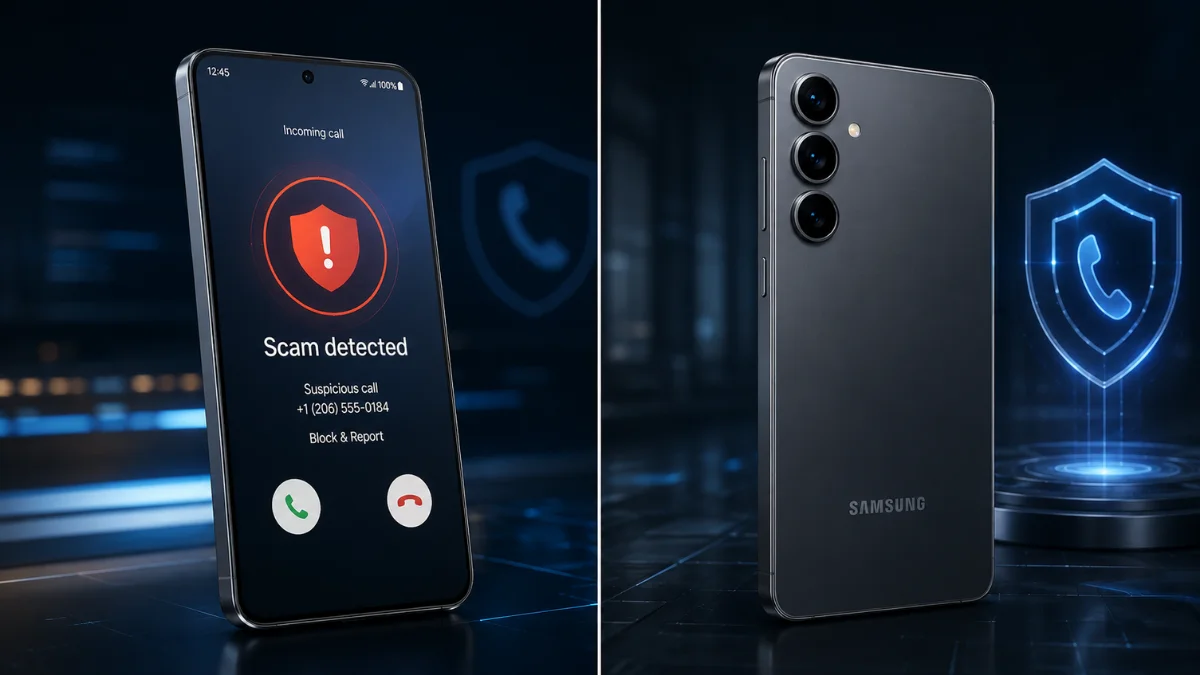
When the system identifies behaviour associated with a scam, the phone can warn the user while the call is still taking place.
That makes the feature different from traditional caller ID protection.
Instead of only asking “Who is calling?”, Scam Detection attempts to answer a more useful question: “Does this conversation look suspicious?”
Galaxy S27 Series Appears in New Findings
The upcoming Galaxy S27 family is one of the most interesting parts of the discovery.
References associated with Samsung’s next flagship generation have reportedly appeared within the relevant Google software.
Samsung has not yet announced the Galaxy S27 series. Nevertheless, the findings suggest Scam Detection is already being considered or tested for Samsung’s future flagship phones.
If development continues as expected, the feature could become part of the security experience offered on the Galaxy S27, Galaxy S27 Plus and Galaxy S27 Ultra.
Exact model support has not been officially announced.
Samsung Scam Detection May Reach Older Galaxy Phones
The story is not limited to unreleased smartphones.
Existing Galaxy devices have reportedly appeared in the compatibility information as well.
These include models from the Galaxy S25 series, in addition to newer Samsung foldable devices such as the Galaxy Z Fold 7 and Galaxy Z Flip 7.
References to Samsung’s Galaxy Z TriFold have also reportedly been identified.
| Galaxy Device | Scam Detection Status |
|---|---|
| Galaxy S27 series | Referenced in new findings |
| Galaxy S26 series | Existing supported generation |
| Galaxy S25 series | Potential expansion indicated |
| Galaxy Z Fold 7 | Referenced |
| Galaxy Z Flip 7 | Referenced |
| Galaxy Z TriFold | Referenced |
Importantly, appearing within application code does not guarantee that a feature will become publicly available.
Google and Samsung could change compatibility before rollout.
Why Scam Detection Could Be Important for Galaxy Users
Spam calls are annoying, but sophisticated scam calls can cause genuine financial damage.
Modern scammers often impersonate banks, government departments, delivery companies, technology support teams or even family members.
AI-generated voices are making the problem more complicated because attackers can potentially make fraudulent conversations sound increasingly convincing.
Real-time detection could provide another security layer.
If a Galaxy phone recognises suspicious language or behaviour during a conversation, an immediate warning could encourage the user to reconsider before sharing sensitive information.
It will not eliminate phone scams completely. However, even a timely warning could prevent some users from making costly mistakes.
Samsung Scam Detection Goes Beyond Caller ID
Samsung Galaxy phones already provide spam and caller identification features.
Scam Detection would serve a somewhat different purpose.
Traditional spam protection generally analyses the caller or phone number before or during an incoming call.
Real-time scam detection focuses more heavily on what happens after the conversation begins.
For example, a scammer might use a new phone number that has never previously been reported.
Traditional spam databases may therefore have little information about it.
Conversation-based detection could potentially identify suspicious behaviour even when the caller’s number itself does not immediately trigger a warning.
What Happens When Scam Detection Finds a Scam?
On supported devices, Scam Detection can alert users when it identifies suspicious behaviour during a call.
The warning allows users to end the conversation before they share sensitive information or take potentially risky action.
However, users should not rely entirely on an automated detection system.
Users should remain cautious whenever an unexpected caller asks for passwords, verification codes, card details or urgent money transfers.
Therefore, users should treat Scam Detection as an additional security tool rather than a replacement for normal caution.
What About Privacy?
Privacy is naturally one of the biggest questions surrounding technology that analyses phone conversations.
Google has previously emphasised on-device processing for its Scam Detection implementation on supported Pixel hardware. Keeping analysis on the phone can reduce the need to transmit sensitive conversation data to remote servers.
The exact implementation can depend on the device and underlying hardware.
Therefore, we will need official information from Google and Samsung before assuming every Galaxy implementation will operate identically.
For Galaxy users, transparent information about processing and data handling will be particularly important if compatibility expands.
AI Could Make Scam Protection More Important
Artificial intelligence is creating opportunities for legitimate services, but scammers can use similar technology.
Voice cloning is one example.
Attackers may attempt to imitate someone a victim trusts and then manufacture an urgent situation involving money.
At the same time, AI can also be used defensively.
Machine-learning models can recognise conversation patterns much faster than traditional number-based spam databases alone.
That creates an unusual technology race: scammers can use AI to make fraud more convincing, while smartphone companies can use AI to recognise those scams more effectively.
Samsung and Google Are Increasing Their Security Focus
The potential expansion of Scam Detection fits into a wider trend across Android.
Samsung and Google have increasingly added security features designed to protect users before an attack causes damage.
Android already includes protections against malicious applications, suspicious links, unsafe browsing and unwanted calls.
Real-time scam detection extends that security into conversations.
This is particularly useful because social engineering often succeeds without malware.
A scammer does not necessarily need to hack a smartphone if they can simply persuade its owner to provide the information voluntarily.
Galaxy S27 Chip References Also Appeared
The software findings may contain another interesting clue about Samsung’s next flagship generation.
References associated with both Samsung Exynos and Qualcomm hardware have reportedly appeared alongside upcoming Galaxy devices.
This has fuelled speculation that Samsung could continue using a dual-chip strategy with the Galaxy S27 family.
The expected Exynos 2700 has previously been linked with Samsung’s future flagship plans, while Qualcomm hardware could remain available in certain devices or markets.
However, chipset references inside software are not enough to confirm Samsung’s final Galaxy S27 processor strategy.
Consequently, this should remain a secondary detail rather than confirmation that particular regions will receive Exynos or Snapdragon models.
Samsung Scam Detection Availability Remains Unconfirmed
There is one major point Galaxy users should remember.
Code references can reveal what developers are testing, but they do not guarantee a public release.
Google could remove devices before launch. Samsung could also limit the feature according to hardware capabilities, language support, region or regulatory requirements.
Additionally, Scam Detection may initially support only certain languages or markets.
We will therefore need an official announcement before knowing exactly which Samsung phones will receive the feature.
Should Galaxy S25 Owners Expect the Feature?
Galaxy S25 owners have a reason to be optimistic because their devices have reportedly appeared in the newly discovered compatibility information.
Still, users should avoid treating the finding as a confirmed update.
If Google can expand Scam Detection without requiring specialised hardware exclusive to newer models, bringing it to the S25 generation would make sense.
It would also significantly increase the number of Samsung users who could benefit from the technology.
For now, however, the safest conclusion is that Galaxy S25 support appears to be under consideration or development.
Mobile Verse Take
Samsung Scam Detection could become one of those Galaxy upgrades that matters more in everyday life than another specification increase.
Faster processors and improved cameras receive most of the attention around new smartphones. However, technology that can potentially stop someone from losing money to fraud has a much more direct practical benefit.
The particularly encouraging part of this discovery is the apparent inclusion of existing Galaxy devices.
If Google and Samsung bring Scam Detection to the Galaxy S25 series and recent foldables instead of restricting it to the Galaxy S27 generation, millions of existing users could benefit.
Google and Samsung still need to answer key questions about availability, privacy, language support and regional access.
Until Google or Samsung makes an announcement, we should treat the newly discovered device references as evidence of ongoing development rather than guaranteed compatibility.
Nevertheless, Samsung’s next major Galaxy security upgrade may already be taking shape.
Related Mobile Verse Reading
Samsung appears to be preparing major changes across both its hardware and software. Read our latest coverage of the Galaxy S27 Ultra camera and its rumoured 4x telephoto upgrade for more on Samsung’s next flagship. You can also explore our report on One UI 9 Beta 7 Satellite Connectivity and Motion Assist, while our Samsung One UI 9.5 features coverage looks further ahead at the software changes being developed for Galaxy devices.
FAQs
What is Samsung Scam Detection?
Samsung Scam Detection refers to Google’s real-time scam protection technology running on compatible Galaxy phones. It can analyse suspicious patterns during calls and warn users about potential fraud.
Will the Galaxy S27 have Scam Detection?
New software findings suggest Google and Samsung are preparing Scam Detection support for Galaxy S27 devices. However, Samsung and Google have not officially confirmed Galaxy S27 compatibility.
Will Galaxy S25 phones get Scam Detection?
Galaxy S25 models have reportedly appeared in newly discovered compatibility information. This suggests Google could expand support to these devices, although neither company has confirmed a public rollout.
Does Scam Detection record phone calls?
Google’s existing implementation has emphasised on-device processing on supported hardware. Samsung and Google will need to provide specific details about how the feature operates across additional Galaxy models.
Is Scam Detection the same as spam protection?
No. Traditional spam protection primarily identifies suspicious callers and phone numbers. Scam Detection can analyse patterns during an active conversation and warn users when it identifies potentially fraudulent behaviour.
Will Scam Detection work in every country?
That is not yet confirmed. Availability could depend on language, region, device hardware and other requirements.
When will Samsung Scam Detection reach more phones?
Google and Samsung have not announced a wider release date. The latest software findings suggest Google and Samsung are preparing additional Galaxy devices for Scam Detection support.