Xiaomi HyperOS 4 Launches With Android 17, New AI Features and Faster Performance
 By Inflix
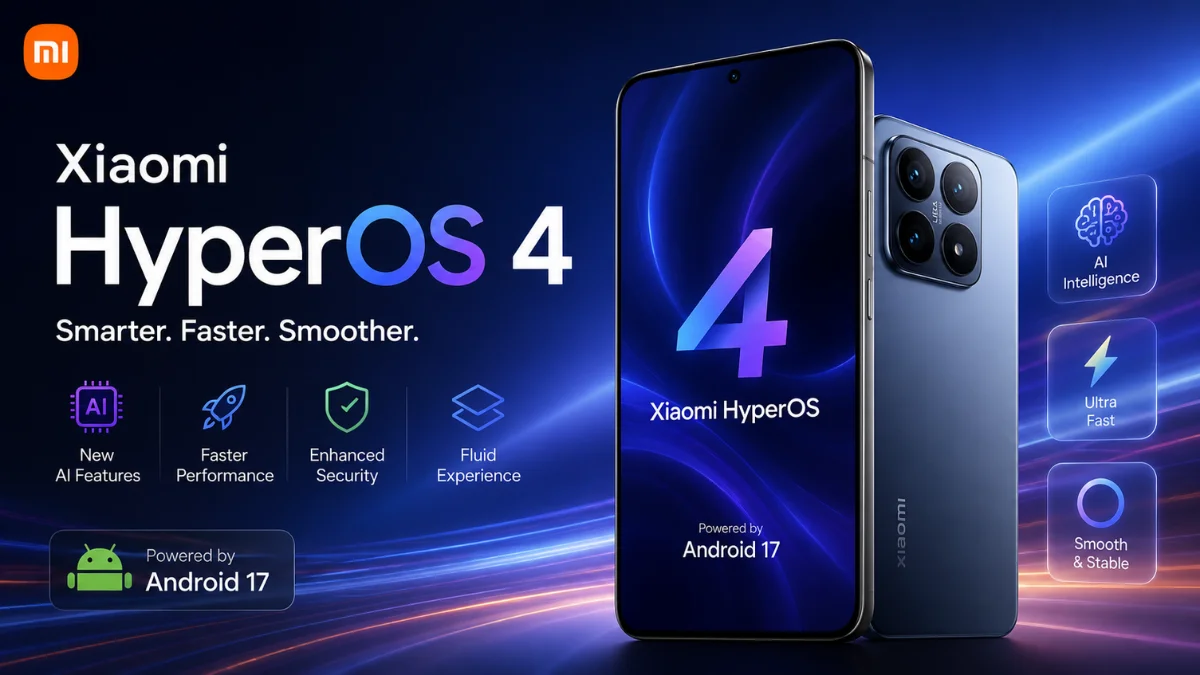
 The HyperOS 4 update is Xiaomi’s latest major software upgrade, bringing Android 17, a redesigned interface, faster system performance and new AI-powered features to supported devices.
The new update is based on Android 17 and introduces a fresh visual style called Soft Light Glass, alongside improvements to app launching, camera speed, animations and smart assistant features.
Xiaomi has already started the first beta rollout in China. However, the company has not yet confirmed a global release date.
What’s New in Xiaomi’s Latest Software?
The HyperOS 4 update focuses on three major areas: design, performance and artificial intelligence.
Instead of completely rebuilding the software, Xiaomi appears to be refining the overall experience with smoother animations, faster app response times and a more modern visual style.
The update also expands Xiaomi’s AI ecosystem with new smart tools designed to help users manage notes, voice content and connected devices more efficiently.
A New Soft Light Glass Design
One of the biggest visual changes in HyperOS 4 is the new Soft Light Glass interface.
The design uses translucent surfaces, lighting effects and glass-like elements across different parts of the operating system.
These changes can appear in areas such as:
- Quick Settings
- Widgets
- Folder backgrounds
- Menu buttons
- Lock screen elements
- System panels
As a result, HyperOS 4 looks more polished and visually layered than previous versions.
However, not every Xiaomi device may receive the complete Soft Light Glass experience. Hardware performance and device tier could affect which visual effects become available.
Apps Should Open Faster
Performance is another major focus of the HyperOS 4 update.
Xiaomi says the new software can reduce app launch times and improve responsiveness during extended use.
Recent performance data shared during the rollout suggests that app launch can be significantly faster than on HyperOS 3.
In addition, Xiaomi has worked on reducing frame drops during scrolling and short-video playback.
These improvements could make everyday navigation feel smoother, especially on newer flagship Xiaomi phones.
Camera Performance Gets Faster
HyperOS 4 also targets camera speed.
The software reportedly reduces the time needed to open the Camera app and improves HDR processing performance under heavy background workloads.
For users, that could mean fewer delays when opening the camera and faster photo processing.
These improvements are particularly useful when taking quick photos or switching between multiple apps before opening the camera.

Xiaomi Expands Its AI Features
Artificial intelligence plays a bigger role in HyperOS 4.
Xiaomi has introduced an upgraded Super AI Assistant 2.0, which uses the company’s MiMo AI model.
The assistant can help with tasks such as:
- Voice transcription
- Note organisation
- Smart device control
- Context-based suggestions
- Content management
Xiaomi is also introducing a feature called Inspiration Ball, which provides contextual actions based on what the user is doing.
Therefore, HyperOS 4 is not only a visual update. Xiaomi is also trying to make AI more deeply integrated into everyday phone usage.
Smoother Animations Across the Interface
Animations have also received attention.
Xiaomi says HyperOS 4 improves transition smoothness across the interface, including app opening, scrolling and switching between different system screens.
Better animations may seem like a minor change, but they can make a major difference to how fast a phone feels.
Even when hardware remains unchanged, smoother visual transitions can make the overall experience feel more responsive.
Which Xiaomi Phones Are Getting It First?
The first HyperOS 4 beta rollout is focused on China.
Initial devices reportedly include models from Xiaomi’s latest flagship and Redmi ranges, alongside selected Xiaomi tablets.
The rollout includes newer models such as:
- Xiaomi 17 series
- Redmi K90 series
- Redmi K100 series
- Xiaomi Pad 8 series
- Selected Xiaomi Pad 7 models
However, availability may vary by model and region.
Xiaomi is expected to expand testing gradually before releasing stable versions more widely.
Will Older Xiaomi Phones Get HyperOS 4?
Many older Xiaomi, Redmi and POCO phones are likely to receive some form of HyperOS 4 support, depending on their software update policies.
However, not every phone may receive every feature.
For example, advanced visual effects such as Soft Light Glass may require more powerful hardware.
Similarly, certain AI functions could remain limited to newer flagship models.
Therefore, users should wait for Xiaomi’s official device-specific rollout details before assuming full feature support.
When Will HyperOS 4 Launch Globally?
Xiaomi has not yet confirmed an official global release date for HyperOS 4.
The current beta rollout is focused on China.
A global rollout is expected later, but exact timing could vary between Xiaomi, Redmi and POCO devices.
Regional certification, carrier testing and hardware differences can also affect when individual phones receive the update.
HyperOS 4 vs HyperOS 3: What Has Changed?
HyperOS 4 appears to focus more heavily on refinement.
Compared with HyperOS 3, the new version introduces a stronger glass-style visual identity, faster app performance and deeper AI integration.
| Feature | HyperOS 3 | HyperOS 4 |
|---|---|---|
| Android base | Android 16/17 depending on device | Android 17 |
| Interface | Previous HyperOS design | Soft Light Glass design |
| AI tools | Existing Xiaomi AI features | Super AI Assistant 2.0 |
| App performance | Standard | Faster app launching |
| Camera performance | Previous optimisation | Faster launch and HDR processing |
| Animations | Existing HyperOS animations | Improved smoothness |
Overall, Xiaomi is focusing less on dramatic structural changes and more on improving speed, design and intelligence.

Why HyperOS 4 Matters for Xiaomi Users
The HyperOS 4 update could be important because Xiaomi is increasingly treating software as a key part of its smartphone strategy.
Fast hardware alone is no longer enough.
Users also expect longer software support, better animations, smarter features and consistent performance over time.
HyperOS 4 addresses several of these areas at once.
Moreover, Android 17 provides Xiaomi with a newer foundation for future security, privacy and platform improvements.
Should You Install the HyperOS 4 Beta?
For most users, waiting for the stable release is the safer choice.
Beta software can contain bugs, battery drain, compatibility problems or unfinished features.
Therefore, the current HyperOS 4 beta is better suited to experienced users who understand the risks of early software.
If your Xiaomi phone is your main daily device, waiting for the stable rollout may provide a better experience.
Final Thoughts
Xiaomi HyperOS 4 looks like a meaningful upgrade rather than a complete software redesign.
The new Soft Light Glass interface gives Xiaomi phones a more modern appearance, while faster app launches, smoother animations and camera improvements could make daily use feel noticeably better.
Meanwhile, Super AI Assistant 2.0 shows that Xiaomi is continuing to expand its AI ambitions across phones and connected devices.
The China beta rollout has already started, but global Xiaomi users will need to wait for official regional release details.
For now, HyperOS 4 appears to be one of Xiaomi’s most important software updates heading into the next generation of Android devices.
FAQs
What is Xiaomi HyperOS 4?
HyperOS 4 is Xiaomi’s latest software platform for Xiaomi, Redmi and POCO devices. It introduces a new visual design, performance improvements and additional AI features.
Is HyperOS 4 based on Android 17?
Yes, the latest HyperOS 4 release is built around Android 17, although Xiaomi software versions can vary depending on the device.
What is Soft Light Glass in HyperOS 4?
Soft Light Glass is Xiaomi’s new glass-style interface design. It adds translucent surfaces, lighting effects and additional visual depth to parts of HyperOS.
Which phones will get HyperOS 4?
The first beta rollout includes newer Xiaomi and Redmi devices in China. Xiaomi is expected to expand the eligible-device list over time.
When will HyperOS 4 launch globally?
Xiaomi has not confirmed the exact global release date yet. The current beta rollout is focused on China.
More Xiaomi and Android Updates: If you are following the HyperOS 4 update, you may also want to read our recent Xiaomi coverage, including the Xiaomi 18 Series global launch, Xiaomi 16 Series global launch, and our latest Android 17 hidden features guide. These articles provide a broader look at the hardware and software changes coming to Android phones.