Galaxy S27 Ultra Could Get Self-Healing Glass: What Samsung’s New Display Technology Could Mean
 By Inflix
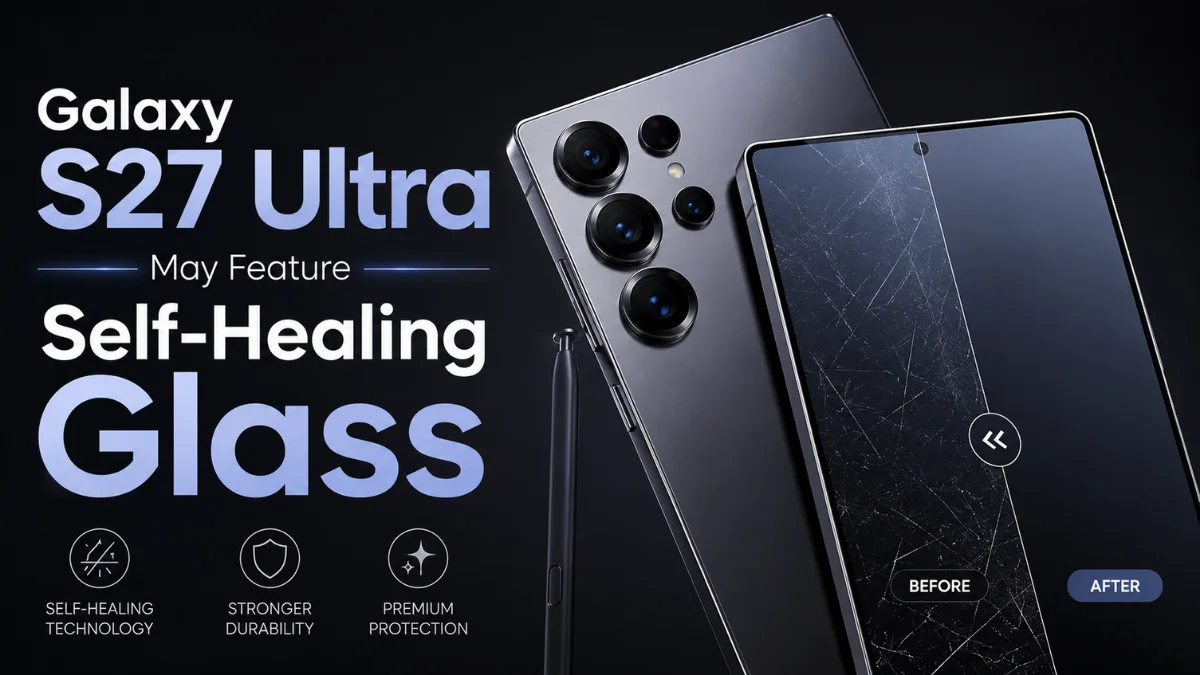
 The Galaxy S27 Ultra could introduce one of Samsung’s most interesting durability upgrades yet, with a new report suggesting that self-healing glass technology may help reduce the appearance of minor screen scratches.
The Samsung Galaxy S27 Ultra is still some distance from its official debut. However, early reports are already pointing towards an interesting display upgrade. According to recent information, Samsung could use self-healing glass technology on its next premium Galaxy phone.
If the technology makes it into the final device, minor scratches on the screen may gradually become less noticeable. As a result, Samsung could improve long-term durability without simply making the glass thicker or heavier.
Still, Samsung has not officially confirmed the feature. Therefore, the details should be treated as an early leak rather than a final Galaxy S27 Ultra specification.
What Is the Galaxy S27 Ultra Self-Healing Glass Rumour?
Recent reports suggest Samsung is exploring advanced display protection for the Galaxy S27 Ultra. In particular, the technology could help the screen recover from very small scratches caused by normal daily use.
That does not mean a badly cracked Galaxy S27 Ultra screen would magically repair itself.
Instead, self-healing technology would most likely target light surface scratches and tiny marks. These are the imperfections that can appear after a phone spends months in pockets, bags, and other everyday environments.
Consequently, the screen could retain its clean appearance for longer.
How Could Self-Healing Smartphone Glass Work?
The term “self-healing glass” sounds futuristic. However, researchers and manufacturers have explored self-repairing materials for several years.
A smartphone implementation could involve a specialized protective layer or coating over the display. When that surface develops a minor scratch, properties within the material may allow it to gradually smooth the damaged area.
Several factors could influence the process, including:
- Heat from the surrounding environment
- Heat generated during normal phone use
- Flexible polymers within a protective layer
- Special chemical bonds capable of reorganising after minor damage
Therefore, the technology would probably work differently from traditional hardened smartphone glass.
More importantly, Samsung would need to balance scratch recovery with clarity, touch responsiveness and impact protection.
What Would Self-Healing Glass Actually Fix?
This distinction is important.
Self-healing technology would not necessarily repair major physical damage. A phone dropped onto concrete could still suffer a cracked or shattered display.
Instead, the technology may be more useful against everyday cosmetic damage.
| Type of damage | Could self-healing technology help? |
|---|---|
| Very light surface scratches | Potentially |
| Small cosmetic marks | Potentially |
| Deep scratches | Unlikely |
| Display cracks | No |
| Shattered glass | No |
| Internal display damage | No |
Therefore, users would still need to protect an expensive flagship smartphone from serious drops and impacts.

Why This Could Be a Big Upgrade for the Galaxy S27 Ultra
Premium smartphones have become significantly more durable. Nevertheless, scratches remain frustrating because they can appear even when a phone has never experienced a serious drop.
The Galaxy S27 Ultra will almost certainly sit at the top of Samsung’s conventional smartphone range. Consequently, buyers will expect excellent durability alongside premium cameras and performance.
Self-healing display protection could offer three particularly useful benefits.
Fewer Visible Micro-Scratches
Small scratches often become visible when bright light hits the display at certain angles. A self-healing surface could potentially reduce these marks over time.
Better Long-Term Appearance
Many people keep flagship phones for several years. Therefore, maintaining a cleaner display could make the Galaxy S27 Ultra feel newer for longer.
Better Resale Condition
Display condition can influence the resale or trade-in value of a smartphone. Although self-healing glass would not prevent serious damage, fewer cosmetic scratches could help users keep their devices in better condition.
Could Samsung Remove the Need for Screen Protectors?
Probably not.
Even if the Galaxy S27 Ultra self-healing glass rumour proves accurate, a screen protector could still provide useful protection against deeper scratches and accidental impacts.
For example, keys, sand and hard debris can cause more severe surface damage than ordinary pocket contact.
Moreover, self-healing materials cannot be expected to repair shattered glass.
Therefore, users who regularly use screen protectors are unlikely to abandon them completely.
Samsung Has Been Improving Galaxy Ultra Durability
Samsung has consistently focused on stronger materials in its premium Galaxy devices. Recent Ultra models have combined tougher display protection with premium frame materials and improved water resistance.
Self-healing technology would represent a different approach.
Rather than focusing exclusively on preventing damage, Samsung could potentially design the surface to recover from certain types of minor damage after they happen.
That would make the feature particularly interesting if Samsung can implement it without compromising display quality.
Galaxy S27 Ultra Display: What Else Could Change?
Self-healing protection may not be the only display improvement Samsung is considering.
Future Ultra phones are expected to continue focusing on high brightness, improved outdoor visibility, better efficiency and premium OLED technology.
Samsung could also refine anti-reflective performance, which has become increasingly important for flagship displays.
However, the company has not announced the Galaxy S27 Ultra yet. As a result, specific display specifications remain uncertain.
The safest expectation is that Samsung will continue improving efficiency and durability while keeping the large premium display experience associated with the Ultra series.
Could Self-Healing Glass Affect Display Quality?
This could become one of Samsung’s biggest engineering challenges.
Adding another layer to a smartphone display can potentially affect:
- Optical clarity
- Colour accuracy
- Touch sensitivity
- Reflectivity
- Thickness
- Long-term durability
Samsung would therefore need a self-healing solution that remains almost invisible during normal use.
The company has considerable experience developing OLED displays and protective technologies. Even so, commercialising self-healing protection on a mass-market flagship would require extensive testing.
Is the Galaxy S27 Ultra Self-Healing Display Confirmed?
No.
Samsung has not officially announced self-healing glass for the Galaxy S27 Ultra.
At this stage, the information should be considered an early rumour or leak. Plans can also change during smartphone development, particularly when a device is still months away from launch.
Therefore, readers should avoid treating self-healing glass as a guaranteed Galaxy S27 Ultra feature.
More reliable information should emerge as Samsung moves closer to the phone’s official launch.
Why Samsung Could Benefit From This Technology
Smartphone manufacturers face an unusual challenge. Modern flagship displays already offer extremely high resolutions, smooth refresh rates and impressive brightness.
Consequently, companies need new ways to differentiate premium devices.
Durability could become one of those areas.
A screen that stays visually cleaner after months of use would offer an improvement that users could notice outside benchmark tests.
Additionally, Samsung could use the technology as a major selling point for its Ultra flagship if competitors continue relying primarily on conventional hardened glass.
Galaxy S27 Ultra Self-Healing Glass: What We Know So Far
| Detail | Current status |
|---|---|
| Device | Samsung Galaxy S27 Ultra |
| Self-healing glass | Rumoured |
| Samsung confirmation | No |
| Expected benefit | Reduced appearance of minor scratches |
| Repairs cracked screens | Unlikely |
| Screen protector still useful | Yes |
| Final specifications | Not confirmed |
The biggest question is whether Samsung can bring the technology from development into a commercially available smartphone.
What This Could Mean for Future Samsung Phones
If Samsung successfully introduces self-healing protection on the Galaxy S27 Ultra, the technology may eventually reach other Galaxy devices.
Samsung often introduces premium features on flagship models before expanding selected technologies to a wider range.
Therefore, future Galaxy S and Galaxy Z devices could potentially benefit from similar protection.
Foldable phones could be especially interesting. Their flexible displays require different protective materials, so advances in self-healing coatings could eventually become useful beyond conventional smartphones.
For now, however, there is no confirmation that Samsung plans such an expansion.
Should You Wait for the Galaxy S27 Ultra?
It is too early to recommend waiting for the Galaxy S27 Ultra based on this feature alone.
Self-healing glass remains unconfirmed. Furthermore, Samsung’s final camera, processor, battery and charging specifications will ultimately have a much greater impact on the overall experience.
However, anyone planning a flagship upgrade in 2027 should keep an eye on the S27 Ultra.
If Samsung combines stronger durability with meaningful camera and battery improvements, the next Ultra could become a much more interesting upgrade than a simple annual specification refresh.

Final Verdict
The possibility of self-healing glass on the Samsung Galaxy S27 Ultra is one of the more unusual rumours surrounding Samsung’s next flagship.
Rather than making the phone indestructible, the technology could focus on a smaller but practical problem: the tiny scratches that accumulate during everyday use.
If Samsung can make those marks less noticeable without affecting display clarity or durability, the feature could offer genuine value to long-term users.
However, nothing is official yet. Until Samsung confirms the technology, self-healing glass should remain firmly in the rumour category.
Internal Linking Paragraph
Samsung’s next flagship is already generating plenty of interest beyond its possible display technology. Readers following the company’s upcoming premium phone can also explore our Samsung Galaxy S27 Ultra leaks and expected release date coverage for a broader look at what Samsung may be preparing. Meanwhile, our coverage of Samsung One UI 9.5 features provides more insight into the software changes that could shape future Galaxy devices. If durability is influencing your next upgrade, our guide on whether foldable phones are worth buying in 2026 also offers a useful comparison of today’s premium smartphone options.
Frequently Asked Questions
Will the Galaxy S27 Ultra have self-healing glass?
Samsung has not confirmed it. Current reports suggest the technology may be under consideration, so it should still be treated as a rumour.
What does self-healing glass do?
The technology could potentially reduce the appearance of light scratches or small surface marks over time. Its exact implementation on the Galaxy S27 Ultra remains unknown.
Can self-healing glass repair a cracked screen?
No evidence suggests that it could repair major cracks or shattered glass. The expected benefit concerns minor surface damage instead.
Would the Galaxy S27 Ultra still need a screen protector?
A screen protector could remain useful because self-healing technology would not necessarily prevent deep scratches, cracks or impact damage.
When will Samsung launch the Galaxy S27 Ultra?
Samsung has not officially announced a launch date. Based on its usual flagship schedule, the Galaxy S27 series would be expected in early 2027, although the exact timing remains unconfirmed.